
07.07.2026 | 18:00
The IPROMO Central Asia Summer School will focus on strengthening technical and institutional capacity and cooperation on sustainable mountain development and glacier preservation.
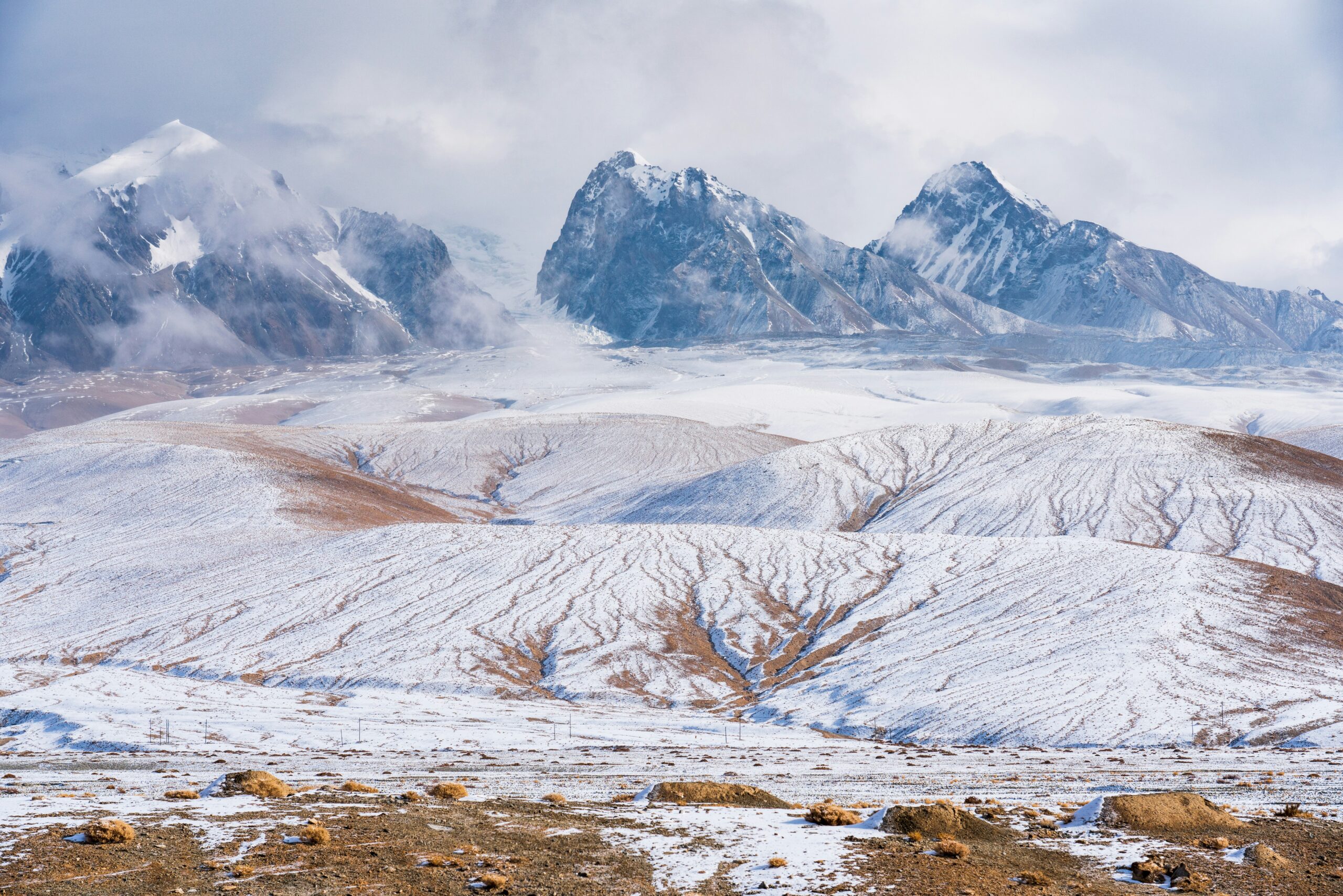
Mountains, often called the ‘water towers’ of the world, provide vital freshwater for billions of people and play a critical role in sustaining ecosystems, agrifood systems, clean energy and livelihoods. Glaciers are crucial to many mountain ecosystems, with nearly 70 percent of Earth’s freshwater stored as snow or ice.
Glaciers are sensitive indicators of climate change and are retreating globally due to rising temperatures. Their loss will strongly impact key economic sectors, including power generation, tourism and agriculture, while potentially increasing water conflicts, migration and downstream hazards.
Changes in the cryosphere are already affecting the water cycle by altering the amount and timing of glacier and snowmelt, groundwater recharge and low flows, all contributing to sea level rise. As glaciers shrink, water availability is expected to decrease, especially in seasonally dry regions, leading to greater competition for water resources.
Mountain freshwater is indispensable for food security, particularly for rural mountain communities, which are among the most food-insecure populations. As of 2017, half of rural mountain dwellers in developing countries were vulnerable to food insecurity. This vulnerability is further exacerbated by the impacts of climate change on agricultural systems that depend on mountain water resources.
Glacial retreat, thawing permafrost and shifts in snow cover are reshaping mountain landscapes and increasing the risk of natural disasters such as glacier lake outburst floods and landslides, threatening infrastructure, communities, cultural traditions and tourism.
Despite their critical role, glaciers are often overlooked in national adaptation policies, with limited attention to glacier-related challenges and opportunities. Yet there is still time to protect and preserve them through emission reductions and transformative adaptation and mitigation strategies that combine scientific research, improved monitoring, early warning systems and risk management.
Recent research highlights the need to strengthen data collection and transboundary cooperation to better inform policy and decision-making. Additionally, the active participation of women, youth, local communities and Indigenous Peoples is essential to developing sustainable solutions, while recognizing the important value of traditional and Indigenous Peoples’ knowledge.
Building on two decades of experience, IPROMO is the Mountain Partnership’s annual two-week course on sustainable mountain development, designed to strengthen the capacity of practitioners working in mountain regions. To date, IPROMO has trained over 400 officers and experts from across the world, creating a strong global community of practice through its Alumni Network.
Recognizing the urgency of glacier loss in Central Asia – where more than 50 percent of glaciers could disappear by 2050, threatening water and food security for over 64 million people – the University of Central Asia (UCA) and the Organization for Security and Co-operation in Europe (OSCE) are hosting a dedicated Central Asia module within the framework of the Mountain Partnership. The course will also contribute to the UN Decade of Action for Cyrospheric Sciences (2025-2034).
The course will provide participants with a comprehensive understanding of sustainable mountain development, with a strong focus on glacier preservation and the security dimensions of climate change and water management in the region. It will combine scientific knowledge with policy, technical and community-based approaches to support effective adaptation and mitigation strategies as well as regional cooperation and networks.
Objectives
The IPROMO Central Asia Summer School will focus on strengthening technical and institutional capacity and cooperation on sustainable mountain development and glacier preservation.
Designed primarily for young, mid-level institutional and government officials from Central Asia, the course aims to equip participants with the knowledge, tools and skills needed to design and implement joint adaptation and mitigation strategies, monitoring systems and risk management frameworks related to glacier and cryosphere loss.
The course will also support regional cooperation by fostering dialogue on transboundary water management, climate diplomacy and shared resource management.
Lectures, case studies and activities will explore climate change in mountain regions, glacier preservation and their critical interlinkages with water management, food systems, biodiversity and livelihoods.
Expected Outcomes
By the end of the course, participants will have a solid understanding of sustainable mountain development, glacier dynamics, the impacts of climate change on security and stability, and the challenges associated with cryosphere loss globally and in the Central Asia region. Participants will strengthen their capacity to develop policies, programmes and projects that address glacier-related risks and promote resilience and cooperation.
Graduates will become part of the IPROMO Alumni Network, fostering continued collaboration, knowledge exchange and joint initiatives at regional and global levels.
Structure and Venue
The summer school will take place in person in Naryn, Kyrgyzstan, at the UCA campus, from 23 June to 7 July 2026.
The course will accommodate approximately 28 participants, selected among mid-level government officials, practitioners and specialists working on mountain and cryosphere issues in Central Asia.
The programme will include lectures, seminars, group work and two field trips. Three main modules will structure the course:
- Introduction to sustainable mountain development and relevant international and regional frameworks
- Glacier preservation and sustainable water management, including scientific, policy and community-based approaches
- Cooperation and dialogue, with a focus on transboundary governance, water management, conflict prevention and climate diplomacy
Participants will also work in groups to develop a final project on glacier preservation.
Sessions will run daily from 9:00 to 13:00 and from 14:00 to 17:00, with breaks in between.
The course will be delivered in English.
Given the challenging mountain environment, participants must demonstrate a high level of adaptability.
Basic Information
- Course directors:
- Deo Raj Gurung – UCA, Naryn, Kyrgyzstan
- Patrizia Albrecht – OSCE, Vienna, Austria
- Thomas Hofer – Mountain Partnership Secretariat, Rome, Italy
- Programme adviser:
- Denis Samyn – UCA, Naryn, Kyrgyzstan
- Programme coordinator:
- Sara Manuelli - Mountain Partnership Secretariat, Rome, Italy
Requirements:
- Excellent command of English
- Mid-level experience in a relevant field
- Advanced scientific degree
- High degree of adaptability
Photo by ダモ リ.